
Building a Resilient Background Worker in Elixir (Without Overthinking It)
Background jobs sound simple — until they aren’t.
Retries pile up.
One failure takes down the whole worker pool.
Jobs disappear silently or run twice.
What I like about Elixir is that it encourages you to design for failure early, instead of patching it later.
This post walks through a simple but production-friendly background worker using GenServer and supervision — no frameworks, no magic.
The Mental Model: Small Processes, Clear Responsibility
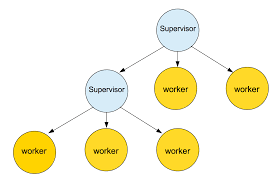
In Elixir, the goal isn’t to create one “smart” worker.
It’s to create many small, replaceable processes.
Each process should:
- Do one thing
- Fail loudly if it can’t
- Be restarted automatically
This is the foundation of fault tolerance on the BEAM.
Step 1: Define the Worker (GenServer)
Let’s start with a worker that processes a single job and exits.
1defmodule MyApp.Worker do
2  use GenServer
3  require Logger
4
5  ## Public API
6
7  def start_link(job) do
8    GenServer.start_link(__MODULE__, job)
9  end
10
11  ## Callbacks
12
13  @impl true
14  def init(job) do
15    send(self(), :process)
16    {:ok, job}
17  end
18
19  @impl true
20  def handle_info(:process, job) do
21    case perform(job) do
22      :ok ->
23        Logger.info("Job completed successfully")
24        {:stop, :normal, job}
25
26      {:error, reason} ->
27        Logger.error("Job failed: #{inspect(reason)}")
28        {:stop, reason, job}
29    end
30  end
31
32  defp perform(_job) do
33    if :rand.uniform() > 0.7 do
34      :ok
35    else
36      {:error, :random_failure}
37    end
38  end
39end
40
Key Ideas
- The worker does its job and exits
- Success and failure are explicit
- No retry logic inside the worker
Step 2: Supervise the Worker
Now we introduce a supervisor to manage worker lifecycles.
1defmodule MyApp.WorkerSupervisor do
2  use DynamicSupervisor
3
4  def start_link(_) do
5    DynamicSupervisor.start_link(__MODULE__, :ok, name: __MODULE__)
6  end
7
8  @impl true
9  def init(:ok) do
10    DynamicSupervisor.init(strategy: :one_for_one)
11  end
12
13  def start_job(job) do
14    spec = {MyApp.Worker, job}
15    DynamicSupervisor.start_child(__MODULE__, spec)
16  end
17end
Why This Works Well
- Each job runs in isolation
- One crash doesn’t affect others
- Restart behavior is consistent and observable
What Happens When a Job Fails?
When perform/1 fails:
- The GenServer crashes
- The supervisor handles cleanup
- Logs clearly show what happened
No silent retries.
No hidden state.
No cascading failures.
This is one of the biggest advantages of building background work directly on the BEAM.
When I Use This Pattern
This approach works well for:
- API-triggered async work
- Data enrichment
- External service calls
- Internal tooling and pipelines
I wouldn’t use it for:
- Massive job queues
- Exactly-once delivery
- Persistent retries without storage
Elixir gives you primitives — not opinions.
Final Thoughts
Elixir didn’t just give me better concurrency.
It changed how I think about failure as a design input.
Small processes.
Clear supervision.
Predictable recovery.
When production gets boring, you’re doing it right.